All Persons
To say it means anything else is a bald-faced lie

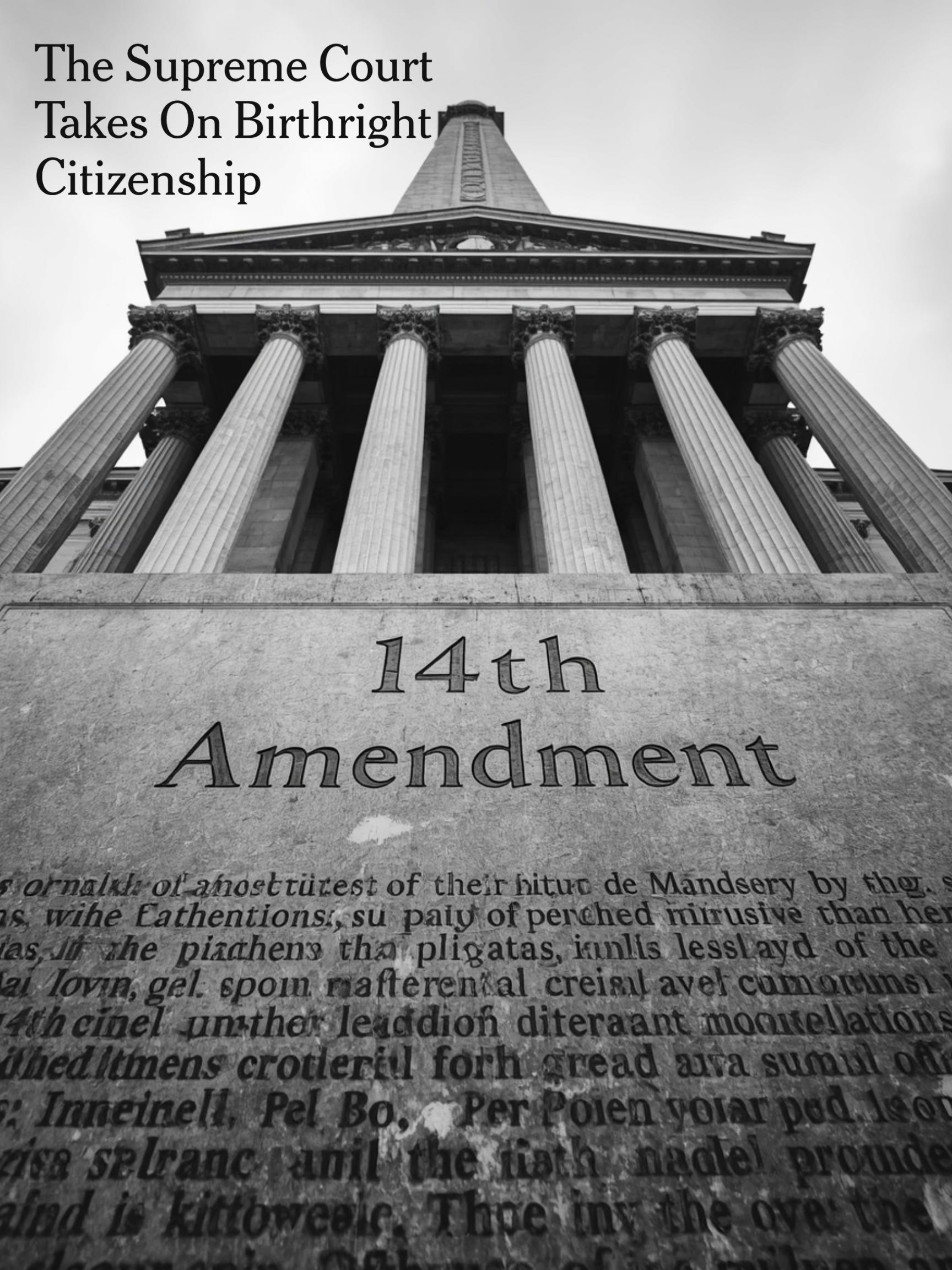
Today’s headlines are a doorway to the past. Let’s walk through it.
The Supreme Court heard arguments this week in a case most Americans couldn’t name. Trump v. Barbara. It’s about a short phrase in the 14th Amendment: subject to the jurisdiction thereof. The administration says those words mean something narrow. Historians say that’s not what they meant. But most of us were never taught enough about the 14th Amendment to know the difference.
That’s not an accident. That’s what this piece is about.
To understand what’s really happening in that courtroom right now, and why it has such lasting implications, we need to go back almost 200 years. To a man most Americans know only as a case name.
Who Was Dred Scott
Dred Scott was born a slave in Virginia at the turn of the 19th century. Originally owned by the Blow family, he was sold to an army surgeon named Dr. John Emerson in 1832. The doctor lived in many places, including Illinois and Wisconsin, which were free states. But when Dr. Emerson and Dred passed into those places, nobody gave him his freedom. It wasn’t like he crossed the border and someone said — you’re free now, you don’t have to be here. No. Dr. Emerson just took him along like luggage. Like anything else he owned.
But things changed when he met the woman who would become his second wife, Harriet. He was forty something. She was seventeen.
At the time they met, they were both enslaved. But owned by different men. Dred had been married before, but after they were married, his first wife was sold to people in Alabama. He went after her, but was caught, harshly beaten, and returned to his owner. Even though that was his wife. It was not protected by slave owners, or by the government, or by love.
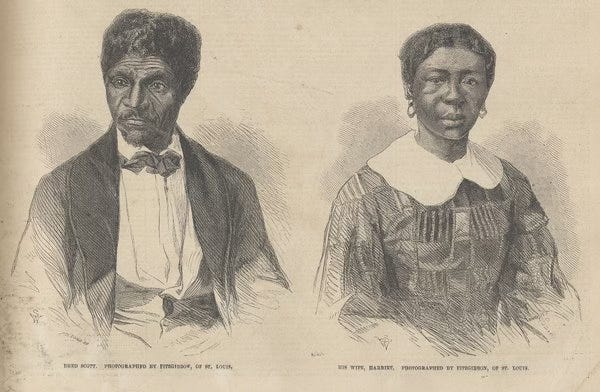
Dred was allowed to marry Harriet, but he also understood that that could be taken from him at any moment. Then they had two daughters — Eliza and Lizzie. When Eliza turned eight years old, that scared Dred and Harriet. Because they knew what could happen. That is the age that enslavers begin separating children from their families. They sell them. They hire them out.
Harriet was a fighter, and she pushed her husband to fight. She knew an abolitionist pastor from her church in St. Louis. She also understood Missouri law — the courts had ruled that enslaved people who lived in free territory could not be re-enslaved. Not only did Dred file a case, but she did too. She wanted to take every chance she could — not just so that they could win, but so their daughters would be free.
On April 6, 1846 — 180 years ago this month — they each filed separate lawsuits.
They won in the lower court. They lost on appeal. They won again and lost again. Their case didn’t just stay in one court. That’s not how a court system works. It moves through a system. They even put their daughters in hiding to keep them from being sold while the courts deliberated.
Ten years later, in 1856, the case went to the Supreme Court. You should note that most of the justices came from slaveholding families. Chief Justice Roger Taney spent his career defending the legal architecture of white supremacy.
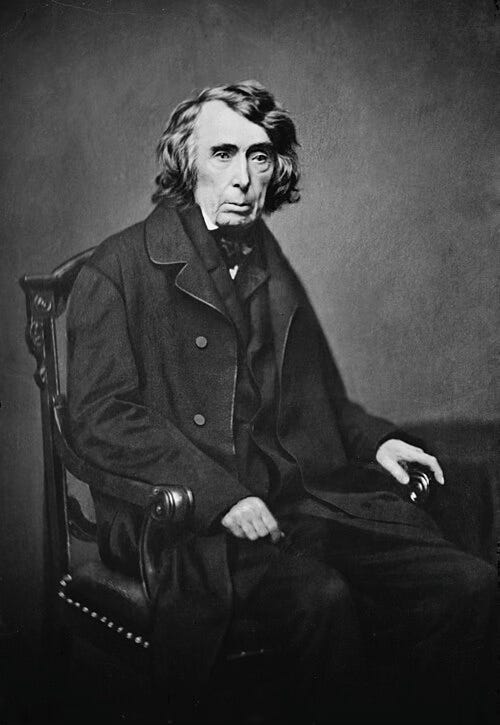
On March 6, 1857, the decision was read aloud. Seven to two against the Scotts.
His ruling did not simply say that Dred Scott lost. It said that no person of African descent — enslaved or free — could ever be a citizen of the United States. That they had no rights the court was bound to respect. That they were not, in the eyes of the law, persons at all.
Then comes the Civil War.
With that, slavery supposedly went away. But that didn’t make former slaves equal under the law.
So Congress wrote the 14th Amendment. It was explicitly, specifically written to make the Dred Scott decision unconstitutional forever.
And it was a huge thing — because President Andrew Johnson, a southern Democrat from Tennessee, did not want to sign it into law. Congress overrode him.
It says: all persons born or naturalized in the United States are citizens.
Not all citizens. Not all free people.
All persons.
What They Actually Said
So we’re essentially having the same argument in 2026 that congressmen had in 1866 — who counts as a real citizen. They thought 160 years ago they cleared the air. And it all comes down to this phrase: subject to the jurisdiction thereof.
The Trump administration believes that anyone coming here from another country — whether on a visa, or as an asylum seeker, or going through the process of becoming a citizen — means that your loyalty may lie with another country. That you may be subject to the jurisdiction of another country. And therefore your child born here is not automatically an American citizen.
The Trump administration also contends that we don’t really know what the framers of the 14th Amendment intended.
And that is a bold faced lie.
We have primary sources in the form of the congressional record that tell us exactly what individual members of Congress said. Records of those discussions. Think about it — we can tune into C-SPAN any time we want. The 1860s version of that was someone taking notes.
So what did they say?
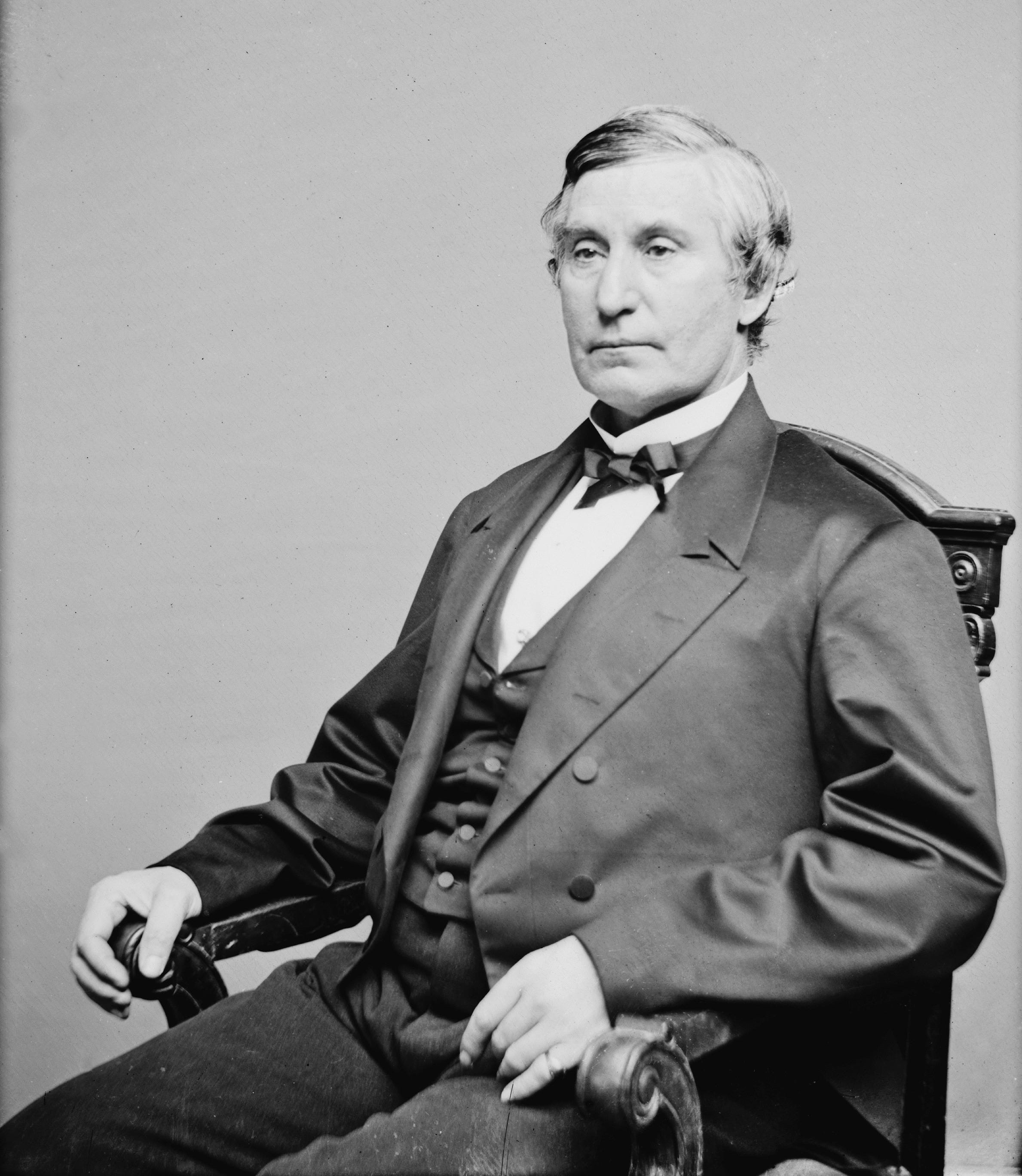
Senator Jacob Howard introduced the citizenship clause and said it was “simply declaratory of the law of the land already, that every person born within the limits of the United States, and subject to their jurisdiction, is by virtue of natural law and national law a citizen of the United States.”
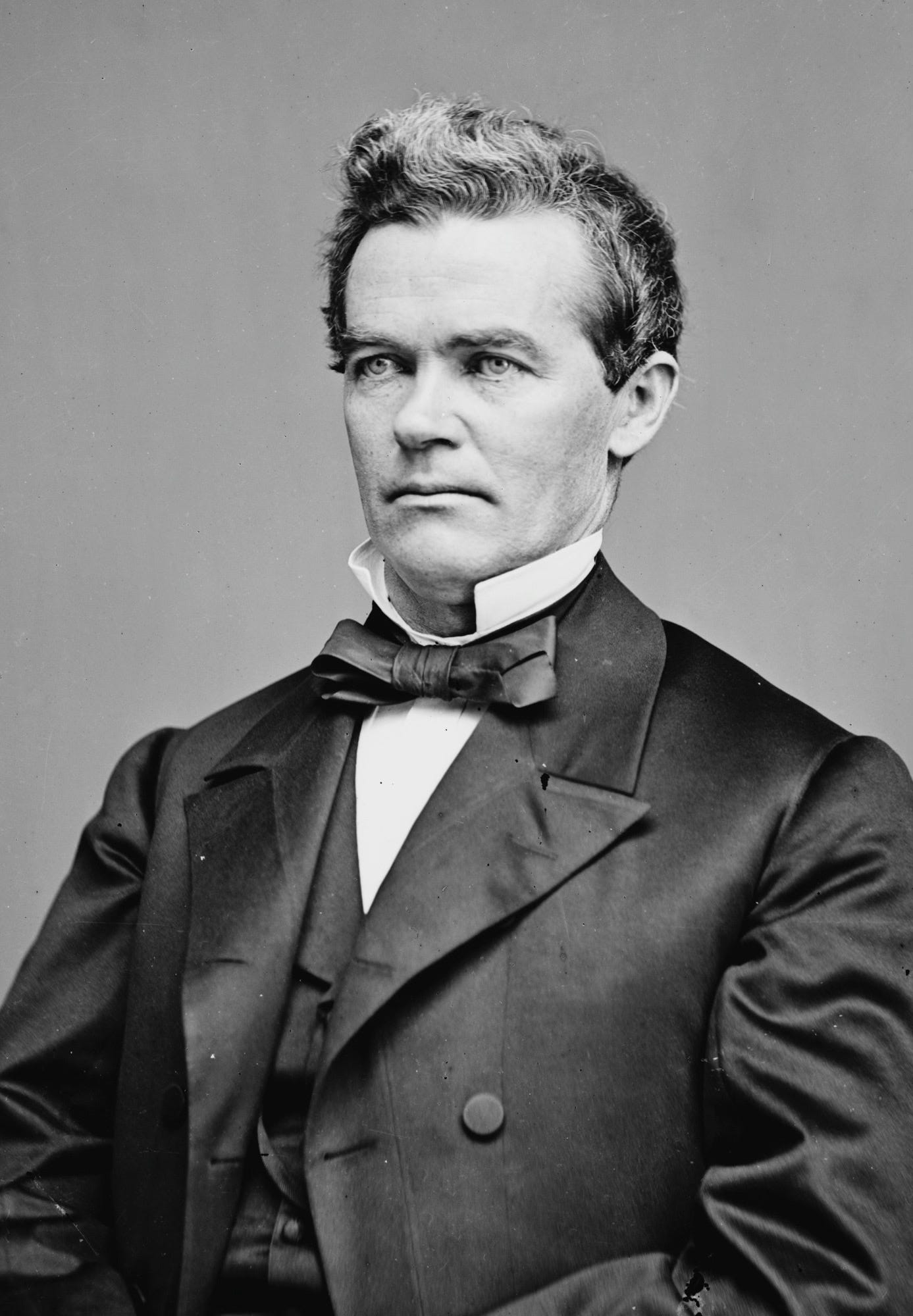
At the time, several lawmakers raised concerns about such a broad guarantee, and they specifically discussed the citizenship of the children of immigrants. Senator John Conness directly affirmed that the proposed language “declares that the children of all parentage should be regarded and treated as citizens of the United States, entitled to equal civil rights with other citizens.”
And most devastating to the Trump administration — the congressional record clearly shows that in 1866, senators specifically debated whether the birthright citizenship clause should apply only to formerly enslaved Black Americans, or to all persons born in the country, including the children of immigrants. The senators concluded:
“Most assuredly they would be citizens of the United States.”
The History Gets More Complicated
And it really sounds like all the problems were solved. But that wasn’t the case. This is where history gets more complex.
Even though the 14th Amendment was ratified in 1868, within fourteen years there were already problems. In 1882, President Chester A. Arthur signed the Chinese Exclusion Act into law. It banned Chinese workers from entering the country for ten years. It was the first time a specific ethnic group had been banned from immigration entirely.
Here’s the context worth understanding. The transcontinental railroad had just been completed — built largely on the backs of Chinese laborers who were praised for their work ethic and their willingness to do dangerous, grueling work. Now those same workers were living out west, looking for other employment, competing for the same jobs as everyone else. And so — blame the minority. It’s an old story.
This pattern should sound familiar. We praised nurses and teachers as heroes during the pandemic. Essential workers. Irreplaceable. And then Robert F. Kennedy Jr. became the head of health for our country, and the Trump administration began dismantling public education. Praised when useful. Discarded when inconvenient. The Chinese railroad workers of 1882 would recognize that feeling.
The act was extended in 1892, made permanent in 1902, and was not repealed until 1943 — right in the middle of World War II — by the Magnuson Act. Sixty one years.
But here’s where it connects directly to where we are today.
Even with the Exclusion Act in place, the 14th Amendment still said that anyone born here was a citizen. Well, you can probably guess what happened next. The government tried to test that too.
Wong Kim Ark was born in San Francisco to Chinese parents. As a young adult he traveled to China to visit family. When he returned to the United States, he was told he wasn’t a citizen and was denied entry into his own country. So he sued.
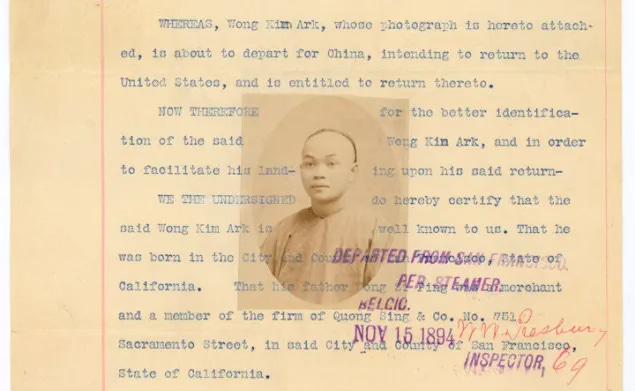
In 1898 the Supreme Court ruled 6-2 that he was in fact a citizen. Born on American soil. Subject to the jurisdiction of the United States. The 14th Amendment means what it says.
That ruling has stood for 127 years.
It is the primary precedent the Trump administration is trying to overturn in Trump v. Barbara right now.
This Brings Us to Today
This brings us to today and Trump v. Barbara — and Stephen Miller’s push to ensure that children of immigrants cannot access the benefits of U.S. citizenship. I’m really wondering why anybody wants to live here right now. Canada is looking pretty nice with their hockey and their maple syrup and their universal healthcare.
Dred Scott spent eleven years in court only to be told by a racist Supreme Court that he wasn’t a citizen. That he wasn’t a person. Wong Kim Ark couldn’t even get back into his own country. He had to sue.
And right now — whichever way the Supreme Court rules on Trump v. Barbara, which we hope will be the right way, the ethical way — we still have a problem. Because in 2025 the Supreme Court ruled that lower courts could not issue national injunctions. That means that every time there is a problem — someone’s citizenship, someone’s rights, someone’s access to healthcare or education — it has to be handled on a case by case basis. That is time consuming. It will clog the court system. It is costly. Most people don’t even know how to navigate the system.
How is that going to make things better for anyone?
We Are All Inside Systems
Whether we know it or not, we are all operating within systems every day. When you put gas in your car or take public transportation, that fuel came from somewhere. How did it get here? That’s a system. When you buy food at the grocery store you are participating in a system. If you ever have anything legal — whether it’s civil or criminal — you are entering into a system. That doesn’t make any of these things inherently bad or good. But systems can be helpful and also unhelpful.
If we think about our country as a system — let’s think about it like a ship instead. The captain charts the course, right? No, actually. The captain does not. The company that owns the ship charts the course. And people are on that ship either as crew or as passengers, with little to no say over how the system works.
But as people operating within that system, they still have power. They have the power to ask — are there enough lifeboats? They have the power to say — there’s a leak down here. They have the ability to say — iceberg dead ahead. You also have the choice to put on a lifejacket and throw yourself into the ocean.
So why am I pushing you on this? Why am I inviting you into this conversation?
Because throughout my life there have been times that complexity has been taken from me. Maybe that sounds great to you. Maybe you’re thinking — well that’s awesome, wouldn’t you love a simple life? Not when your autonomy is taken from you. Not when you are told that your thoughts are wrong. Not when you are living in a conservative fundamentalist religious home where there is black and white and absolutely no gray.
That’s unhelpful. Because there is always gray in any system.
Don’t believe me? Think of your favorite person in the whole world. They’ve messed up. Think of the person you despise most. They’ve probably done something nice for someone. There is always gray.
Many people — myself included — were taught that the answer lies outside of ourselves instead of within our own souls. I’m not saying go out and try to solve all the world’s problems on your own. I’m saying listen to that inner voice. Find out how you want to be a part of this.
I got involved politically. Other people join organizations to make sure people have enough food.
Do something. Check on an elderly neighbor. Volunteer at a food bank. Change careers. If you see something, say something.
A Note on What I Left Out
The history of Native Americans and citizenship — which wasn’t granted until 1924 — deserves its own piece. I haven’t forgotten it. Consider this an invitation to keep asking questions.
Sources and Further Reading
Primary Sources
Dred Scott v. Sandford, 60 U.S. 393 (1857)
United States v. Wong Kim Ark, 169 U.S. 649 (1898)
Plyler v. Doe, 457 U.S. 202 (1982)
Trump v. CASA, Inc. (2025) — Supreme Court ruling limiting universal injunctions
Trump v. Barbara (2026) — currently before the Supreme Court
Congressional Globe, 39th Congress, 1st Session (1866) — debates over the 14th Amendment
Chinese Exclusion Act, May 6, 1882
Indian Citizenship Act, 1924
Magnuson Act, 1943
For Further Reading
Lea VanderVelde, Mrs. Dred Scott: A Life on Slavery’s Frontier (2009)
Eric Foner, The Second Founding: How the Civil War and Reconstruction Remade the Constitution (2019)
Erika Lee, America for Americans: A History of Xenophobia in the United States (2019)
Mae Ngai, Impossible Subjects: Illegal Aliens and the Making of Modern America (2004)
Garrett Epps, “The Citizenship Clause: A Legislative History,” American University Law Review (2010)
Brennan Center for Justice — Birthright Citizenship Under the U.S. Constitution
SCOTUSblog coverage of Trump v. Barbara (April 1, 2026)