Saved
How the language of salvation shaped my childhood ... and why it still catches my ear in politics today

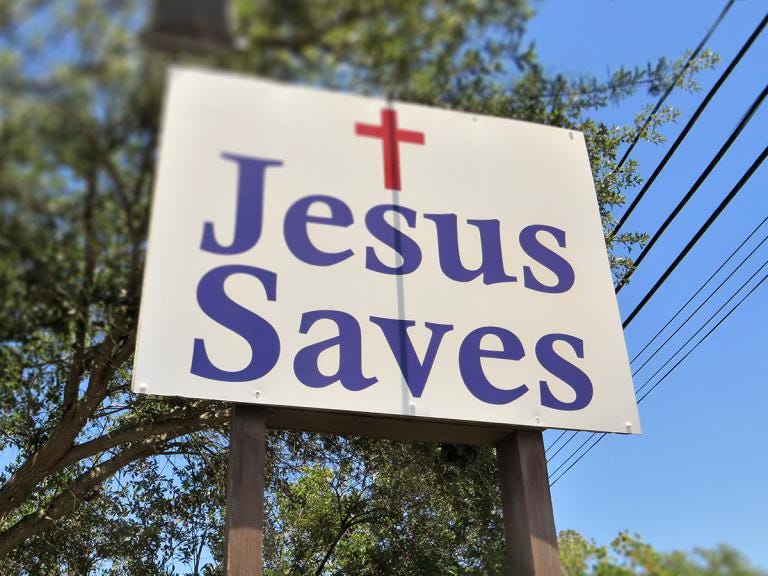
Audio note: A short free sample of the audio version of this essay is available for all subscribers. The full audio version is available to paid subscribers below the paywall.
When I first heard about the SAVE Act, something about the name immediately caught my attention.
The word saved.
If you didn’t grow up in certain church environments, that word might not register as anything unusual. It might sound like ordinary political language. But to me, it carried a whole vocabulary of memories.
Growing up, I heard that word constantly.
My family attended what most people would call a fairly mainline church. But within my parents’ circle of friends and extended community, the language of salvation was everywhere. People talked about getting saved the way other families talked about graduations or weddings. It was something that happened. A moment you could point to.
You accepted Jesus into your heart.
You asked forgiveness for your sins.
You were born again.
And then you were saved.
Summer church camps revolved around it. You didn’t go to camp to get baptized. You went to camp to get saved.
Saving came first. Baptism came later.
Everyone disagreed about baptism — when it should happen, what kind counted, whether it was sprinkling or immersion — but basically everyone agreed there was water involved. Salvation, though, was the real turning point.
Even the structure of the week built toward that moment.
Decision for Jesus
At one point in my life, I wrote Vacation Bible School curriculum. By Thursday, the entire narrative arc was leading to what we called “decision day.” The language had to be written carefully so it wouldn’t offend any denomination, otherwise churches wouldn’t buy the curriculum, but everyone knew what Thursday was about.
That was the day kids were invited to make a decision for Jesus.
Looking back, the moment reminds me of the chord change during the altar-call song at the end of a service. The music would swell slightly. The tone would soften. Everyone in the room knew this was the moment the story had been building toward.
This was the moment to respond.
Rededicating Your Life
Even after someone got saved, the story didn’t necessarily end there. There was also rededicating your life. If you felt you had slipped or fallen short, you could recommit.
As a kid, I always felt like there was something to rededicate.
Every Sunday seemed to carry the quiet suspicion that maybe I had fallen just short of what God expected.
Salvation language surrounded everything.
So when I heard about the SAVE Act, my ear caught the word immediately.
“Save” is not a neutral word for people who grew up in that world.
In church, saving meant rescue. Redemption. The difference between heaven and hell. We were told you could miss heaven by 18 inches, the distance between knowing Jesus in your head and accepting him in your heart.
It was a word filled with urgency.
And sometimes, that urgency showed up in ways that felt impossibly heavy.
If this resonates with you, consider supporting my work by becoming a paid subscriber. The story continues below.
